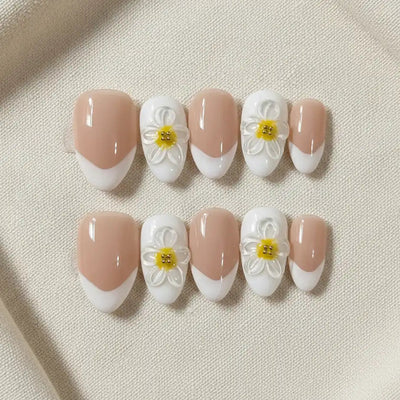
Coffin Nails
Also called ballerina, a long shape with a straight, flat tip resembling a coffin or ballerina slipper.
Trend context
How to get the look
Coffin is defined by two cuts and one curve. File the sidewalls straight inward from the widest point of the nail so the taper is symmetrical on both sides, then take the tip off flat and square, perpendicular to the centre line. The detail that separates a good coffin from a flat, weak-looking one is the C-curve: the arch running across the width of the nail. Without it the tip looks thin and the shape reads as a mistake; with it the nail has structure and the flat edge looks deliberate. Because the taper removes material from exactly the area that carries the most leverage, the shape needs either a rigid base or enough thickness at the stress point -- this is why coffin holds far better as a pre-formed hard press-on tip than as a filed-down natural nail. Check the taper by looking at the hand straight on rather than nail by nail; asymmetry is invisible at close range and obvious from a metre away.
How to wear
The flat tip is the widest uninterrupted surface of any nail shape, which is why chrome, glass finishes, micro French and hand-painted art all read better on coffin than on a rounded shape -- the reflection or the motif does not curve away from the viewer. That also means a plain coffin set can look unfinished in a way a plain almond does not, so it rewards a finish with something to look at. Medium is the length that actually gets worn: long coffin photographs beautifully and interferes with typing, driving and anything involving a pocket, while short coffin keeps the graphic silhouette and removes most of the friction. It suits wider nail beds particularly well because the inward taper visually narrows the finger, which is the opposite of what a square tip does.